
AXGut-on-chip: Advancing Drug Testing with a Human 3D Peristaltic Platform
Laurène Froment, Jón Pétur Jóelsson, Michael J. Parnham, Giulia Raggi, Lea De Maddalena, Nicole Albrecher, Aude Rapet, Oliver Steck, Andreas Hugi, Jennifer Kricker, Nina Hobi, Janick D. Stucki
Inflammatory bowel disease (IBD): Limited treatments options
Inflammatory bowel disease (IBD), including its two main forms Crohn’s disease (CD) and ulcerative colitis (UC), is one of the most common inflammatory conditions affecting the gastrointestinal tract. While the prevalence of this chronic and incurable intestinal disorder is increasing worldwide, the mechanisms involved are poorly understood. This knowledge gap led to the absence of cure, limiting therapeutics schemes to symptoms relief through preventive treatment.
Recreating Gut Physiology: Modelling the Microenvironment with Peristalsis
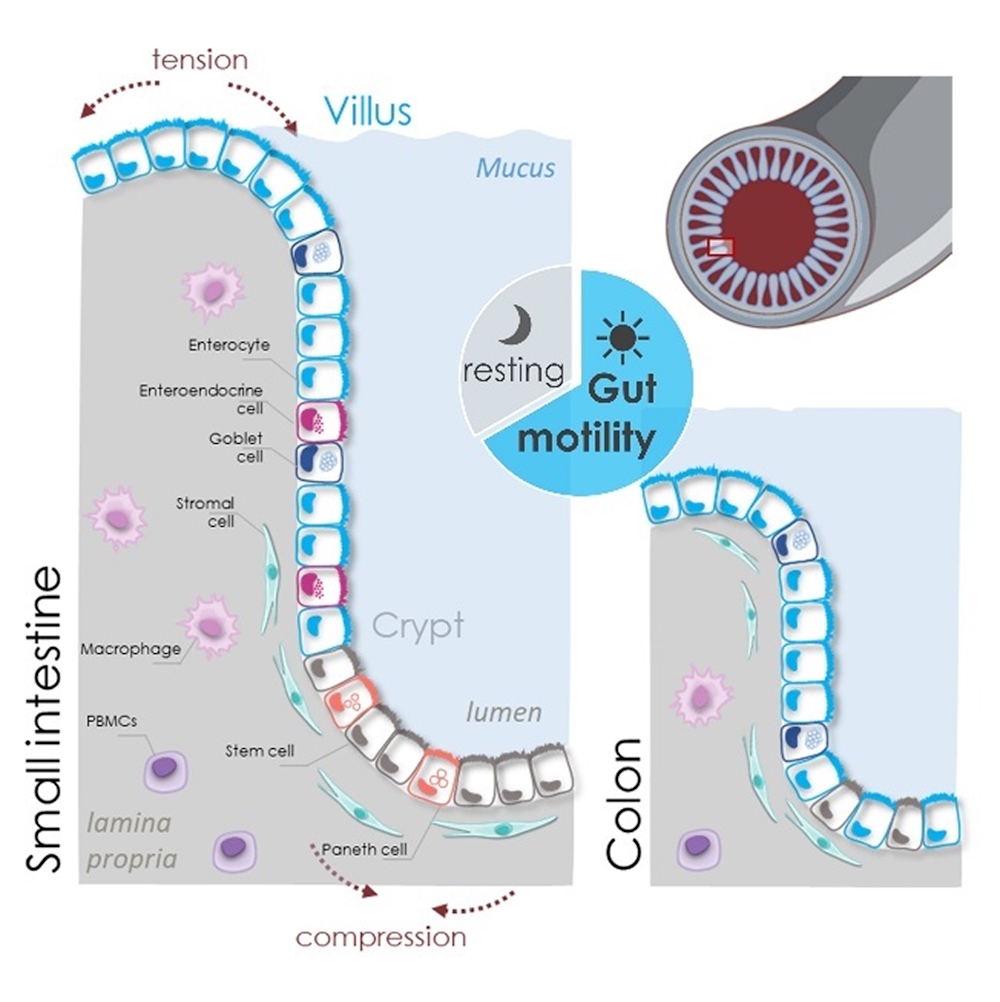
In this work, we present the characterization of our AXGut-on-chip model, a platform that integrates the physiological 3D peristaltic movement acting throughout the digestive tract. The model was used to evaluate the safety and efficacy of candidate compounds for treating IBD. To replicate the intestinal microenvironment, we established a co-culture of epithelial cell lines expressing enterocyte- and goblet-like characteristics. These cells were exposed to cyclic mechanical stimulation following the natural daily activity patterns, active during the day and resting at night. To simulate inflammatory conditions, a pro-inflammatory cytokine cocktail was applied.
Key findings:
- Our AXGut-on-chip model shown the formation of a stable epithelial barrier, the development of a polarized brush border, the expression of key epithelial gut markers and the presence of a functional enzymatic activity.
- The integration of 3D peristalsis motion enhanced the model’s sensitivity to inflammatory stimuli, resulting in a significant barrier disruption and an increase release of pro-inflammatory cytokines.
- One of the lead candidate compounds tested to treat IBD showed a reduction in cytotoxicity and inflammatory cytokines release, while also helping to protect barrier integrity.
Conclusion
Our AXGut-on-Chip model, incorporating cyclic 3D peristalsis motion, offers a physiologically relevant platform for simulating intestinal conditions. Its high sensitivity to pro-inflammatory stimuli makes it a powerful tool for disease modelling, pharmacokinetic studies, and the assessment of drug safety and efficacy.


