
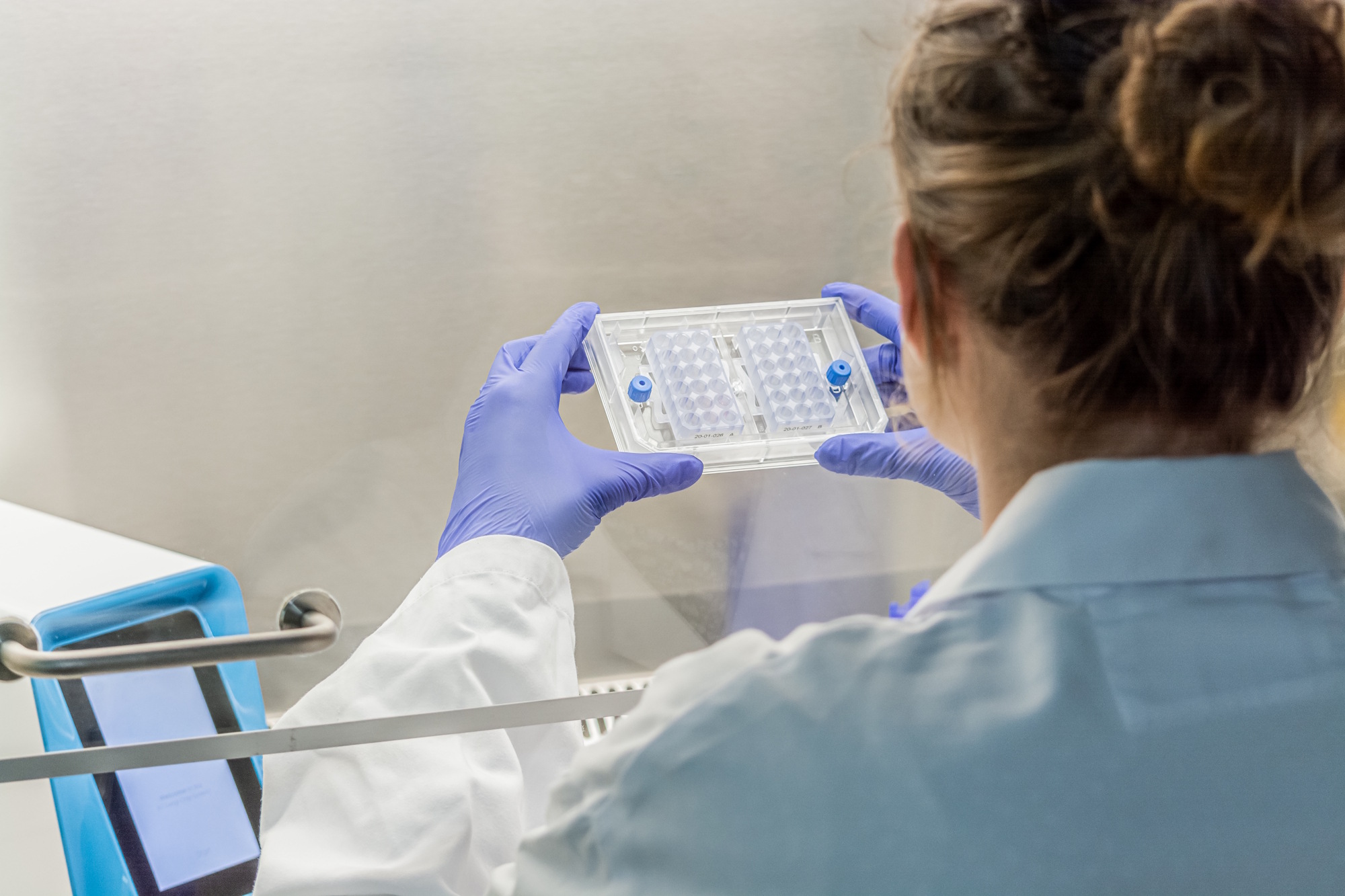
Organ-on-Chip: a powerful tool
Organ-on-a-Chip technology is a true game changer in biomedical research and drug development. By replicating the complex functions of human organs on a microchip, it allows scientists to study diseases and test new drugs with unprecedented accuracy. Unlike traditional methods, which rely heavily on costly, time-consuming animal testing and clinical trials, Organ-on-a-Chip provides human-relevant data early in the development process. This significantly reduces the risk of failure in later stages, cuts down on R&D expenses, and accelerates time-to-market for new therapies. It’s not just a scientific breakthrough—it’s a smarter, faster, and more ethical way to innovate in healthcare.
Organ-on-chip (OoC) systems are miniature, cell-based models that create environments for cells that closely mimic their natural conditions in the body. These systems emerge from the intersection of microfluidics, engineering, biomedical, and materials science, and they replicate the smallest functional units of organs. OoCs help bridge the gap between the dynamic microenvironments found in living organisms and the static conditions of traditional laboratory cultures. Their goal is to simulate both the healthy and diseased conditions of tissues in a lab setting. These systems hold great promise for predicting how new therapies will affect humans, potentially reducing drug failure rates and the need for animal testing.
Organ-on-chip (OoC) systems are miniature, cell-based models that create environments for cells that closely mimic their natural conditions in the body. These systems emerge from the intersection of microfluidics, engineering, biomedical, and materials science, and they replicate the smallest functional units of organs. OoCs help bridge the gap between the dynamic microenvironments found in living organisms and the static conditions of traditional laboratory cultures. Their goal is to simulate both the healthy and diseased conditions of tissues in a lab setting. These systems hold great promise for predicting how new therapies will affect humans, potentially reducing drug failure rates and the need for animal testing.
How can we help with our Organs-on-Chip?
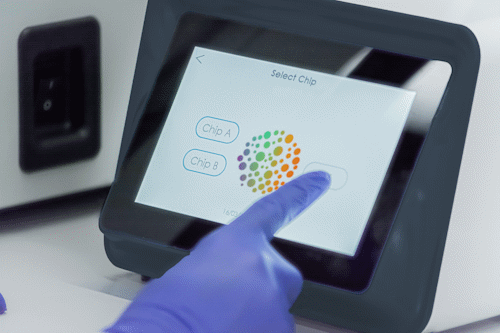
Our technology: AX Barrier-on-chip
- An ultra-thin, porous membrane that allow close cell interactions
- Tunable options for uni- or bidirectional stretching.
- The ability to culture multiple cell types
- Full control over your mechanical stimuli, including amplitude, frequency, duration, and profiles.
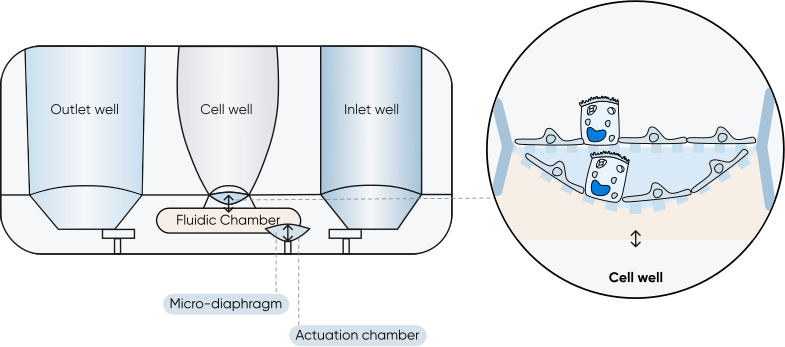
Microfluidic Device with Membrane-Based Actuation
Schematic representation of a cell culture system where fluid flow and mechanical strain are controlled through a flexible micro-diaphragm.


